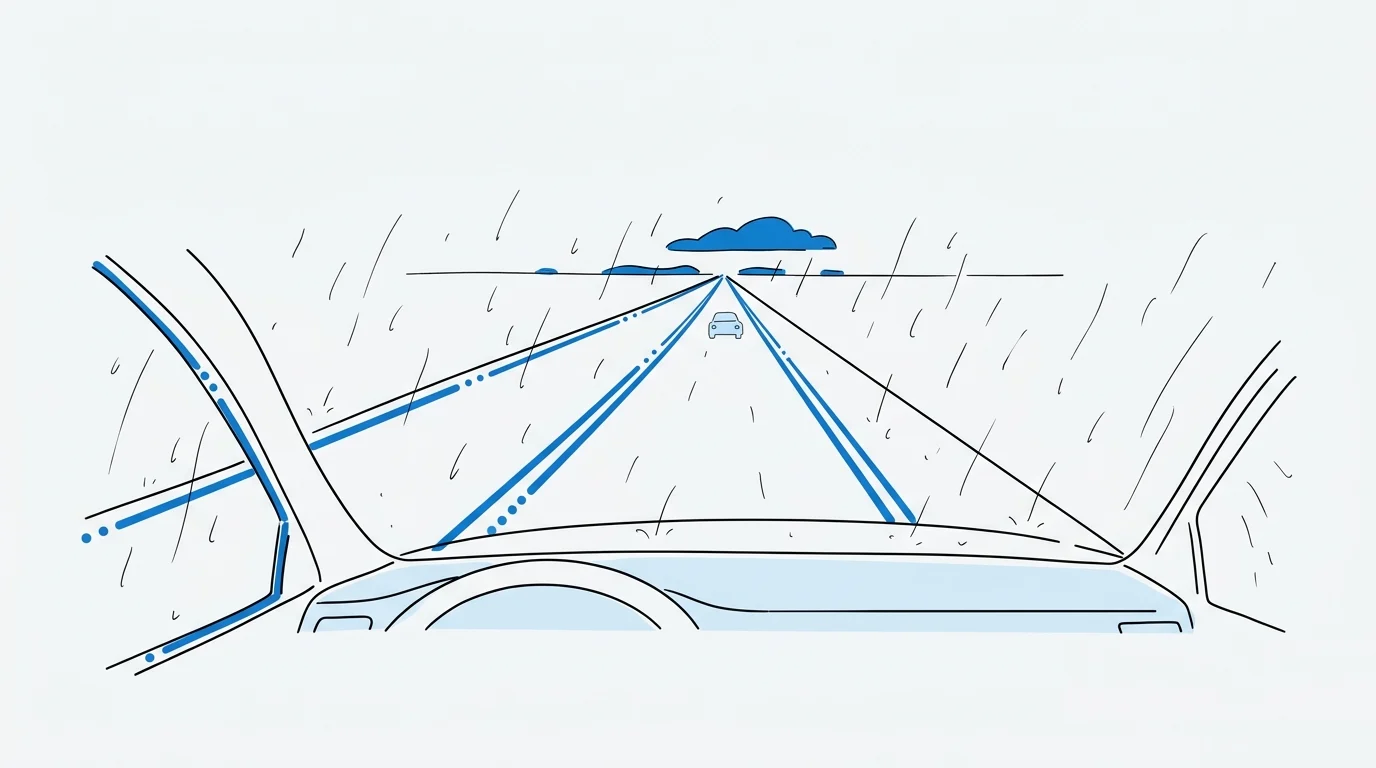
Modern lane detection models such as CLRNet, LaneATT, and Laneformer perform impressively on benchmarks, processing hundreds of frames per second with strong F1 scores. But test them in a construction zone, on a rainy night, or on faded markings under temporary paint, and that confidence collapses.
The LanEvil benchmark confirmed this across 14 environmental corruption types: every top-performing model degraded, with shadow and glare producing the worst failures. This is not an architecture problem. It is a data coverage problem.
Why Lane Annotation Is Hard at Scale
It sounds straightforward until you are doing it across 100,000+ frames in adverse conditions.
Polyline precision isn’t optional. Keypoints need consistent placement across tens of thousands of frames. Approximate positioning compounds into real model instability, the kind that shows up as jitter or phantom lanes in production, not in your validation set.
Dashed-marking continuity requires judgment. Annotators have to follow the implied trajectory through gaps in dashed lines, not just mark what is visible. That is a protocol decision, and without clear guidelines, different annotators make different calls on the same frame.
Edge cases are where the model actually lives. Faded markings, partial occlusion from trucks, conflicting paint in construction zones, and rain reflections that mimic lane boundaries are exactly what break production systems, and exactly what most training datasets underrepresent.
Benchmarks Only Tell Part of the Story
TuSimple is mostly used for quick prototyping, not benchmarking. CULane shows top models still struggle with “no line” and “night” categories, which means difficult conditions are common, not rare.
Research has also found that printed patches resembling grime on the road surface can fool lane-centering systems during real driving. Models trained only on clean roads do not question unusual patterns, revealing a training data gap rather than a model issue.
Better training data is the most direct path from benchmark accuracy to road accuracy.
About Smart Annotahub
Smart Annotahub is a managed data annotation company based in Ha Noi, Viet Nam. Our in-house annotators, QA leads and project managers turn raw image, video, 3D, geospatial, text and audio data into training-ready datasets for teams building computer vision, robotics and language AI. Every project starts with a free pilot, runs on your guidelines and tools, and ships with multi-stage quality checks.
Our Services
Frequently Asked Questions
How does the free pilot work?
Send us a sample of your data and your guidelines. We annotate it at no cost, report accuracy and turnaround, and return a precise quote, usually within a few working days.
How do you ensure annotation quality?
Every batch passes annotator self-checks, peer review and a dedicated QA lead. We agree accuracy targets up front and share QA reports with each delivery.
Can you work in our annotation tool?
Yes. Our team works in your platform or ours and delivers in the formats your pipeline expects, such as COCO, YOLO, Pascal VOC or custom JSON.
How is my data kept secure?
All work is done by our in-house team under NDA, with role-based access and no data leaving approved environments. See our Data Privacy Notice for details.
How is pricing calculated?
Per object, per hour or per project, depending on the task. See Pricing for reference rates, or request a pilot for an exact quote.
Want to see the difference on your own data?
Request Free Pilot