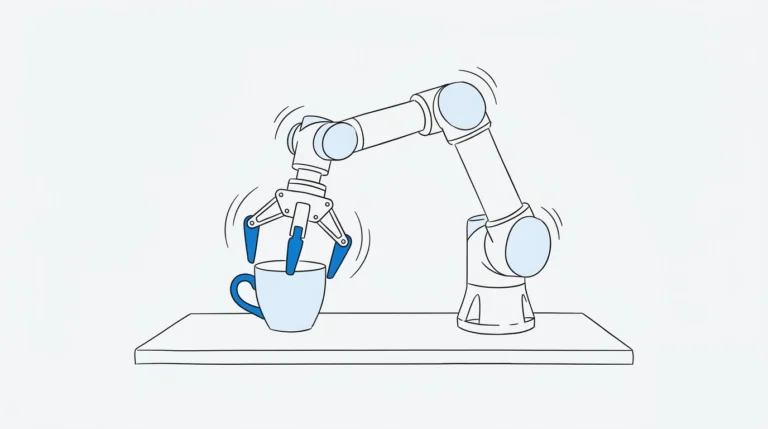
54% higher manipulation success rates. That is what training on egocentric video gets a robot before it ever touches physical hardware, according to NVIDIA’s EgoScale research.
That number is a good example of why first-person data is quietly becoming one of the most important training inputs in robotics and spatial computing, and why it is one of the hardest to annotate well.
Egocentric vs. Exocentric Data
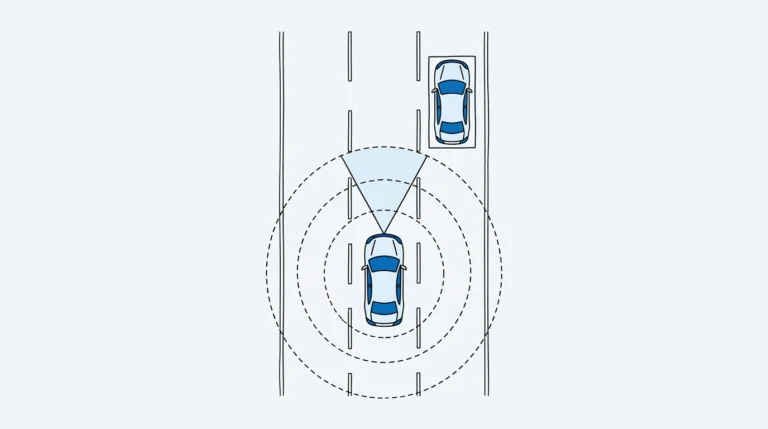
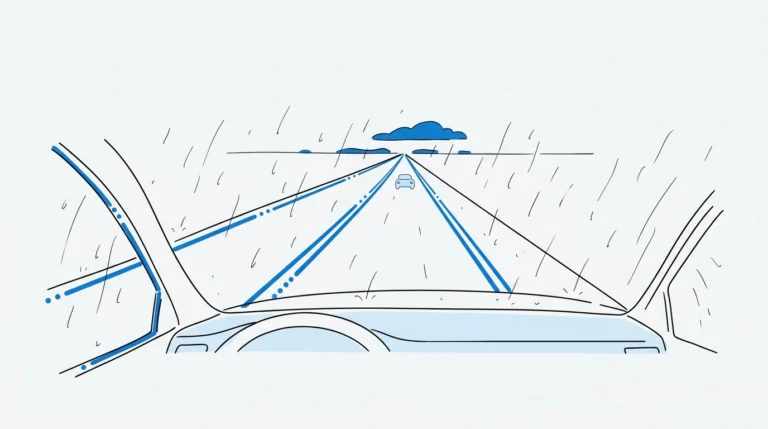
Standard computer vision trains on third-person, external views: the camera watches the actor from outside. Egocentric data flips that entirely. The camera moves with the actor. Hands and tools dominate the frame. Objects enter and exit view constantly. Motion blur is the norm, not the exception.
That shift creates annotation challenges that static computer vision datasets simply do not have.
Objects Don’t Stay Put
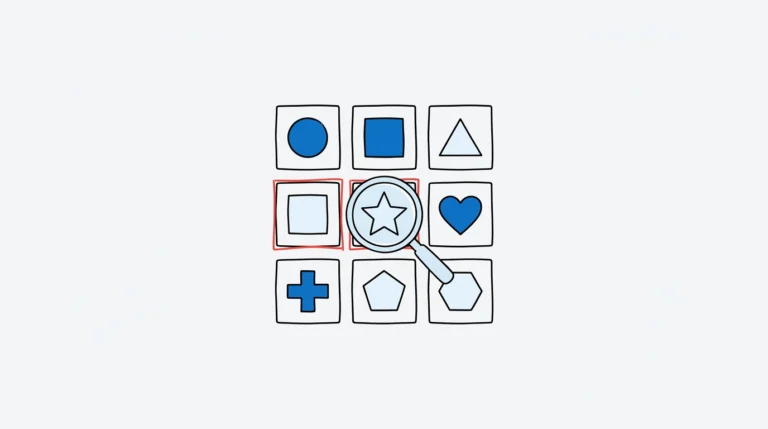
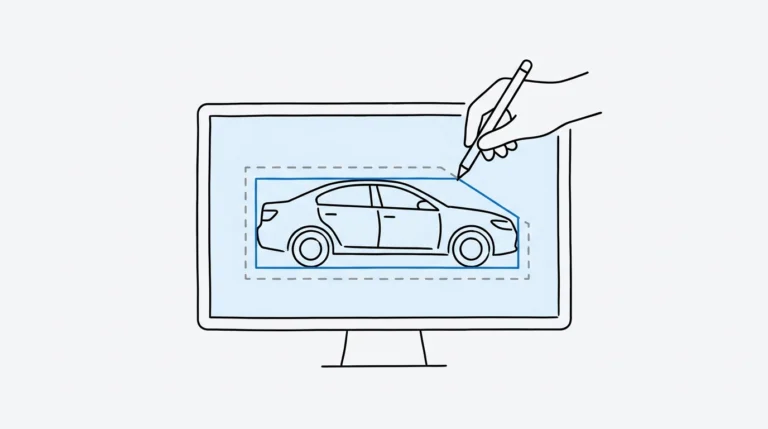
Because the camera moves with the actor, the same object might leave the frame and re-enter seconds later, and your model needs to know it is still the same object. That requires persistent track IDs and occlusion states that quantify exactly how much of an item is hidden by a hand at any given moment. Simple bounding boxes do not capture this.
Presence Isn’t Enough; Intent Matters
Egocentric models need to understand functional relationships, not just which objects are in view:
- What the actor intends to reach for
- The exact frame where physical contact begins
- Which hand is doing the active work and which is supporting it
- Whether a tool (a screwdriver) is being distinguished from the object it acts on (a screw)
This is a fundamentally different annotation task from “label the object in this frame.”
Actions Unfold Over Time
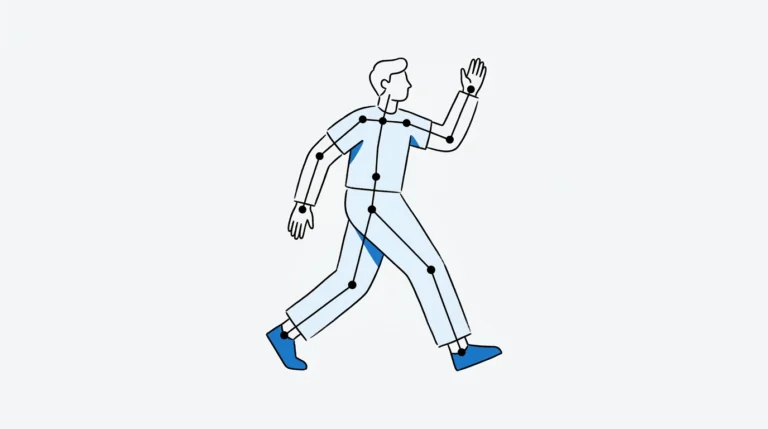
Assembling a part or picking up an item needs clear start points, contact moments, and final states, labeled with precise temporal boundaries rather than per-frame tags. Get these boundaries wrong and your model cannot reliably judge whether an action succeeded.
What Leading Teams Do Differently
The teams building reliable AR/VR and robotics perception systems are not just collecting more egocentric footage. They invest in annotation workflows built specifically for hand-object interaction, contact-frame precision, and object persistence across viewpoint shifts, because none of that transfers cleanly from a standard object detection pipeline.
About Smart Annotahub
Smart Annotahub is a managed data annotation company based in Ha Noi, Viet Nam. Our in-house annotators, QA leads and project managers turn raw image, video, 3D, geospatial, text and audio data into training-ready datasets for teams building computer vision, robotics and language AI. Every project starts with a free pilot, runs on your guidelines and tools, and ships with multi-stage quality checks.
Our Services
Frequently Asked Questions
How does the free pilot work?
Send us a sample of your data and your guidelines. We annotate it at no cost, report accuracy and turnaround, and return a precise quote, usually within a few working days.
How do you ensure annotation quality?
Every batch passes annotator self-checks, peer review and a dedicated QA lead. We agree accuracy targets up front and share QA reports with each delivery.
Can you work in our annotation tool?
Yes. Our team works in your platform or ours and delivers in the formats your pipeline expects, such as COCO, YOLO, Pascal VOC or custom JSON.
How is my data kept secure?
All work is done by our in-house team under NDA, with role-based access and no data leaving approved environments. See our Data Privacy Notice for details.
How is pricing calculated?
Per object, per hour or per project, depending on the task. See Pricing for reference rates, or request a pilot for an exact quote.
Want to see the difference on your own data?
Request Free Pilot